Sponsored article
Countertop, Floor, or Dump Bin Display—How to Match a Display Unit to a Product and Retail Zone?
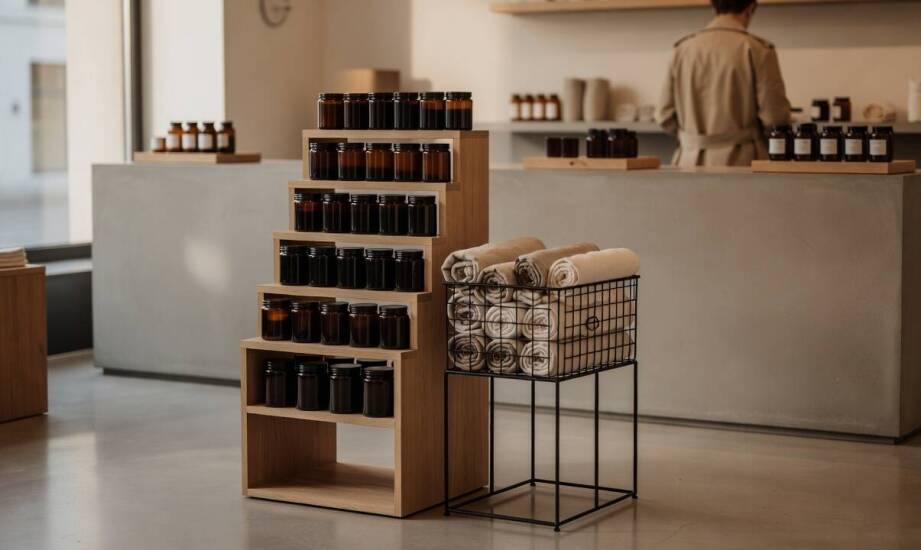
- Countertop, Floor, and Dump Bin Displays in Retail Practice
- Countertop Displays for Impulse Purchase Zones
- Floor Displays That Increase Visibility
- Dump Bins for Promotional and Clearance Campaigns
- How Product Characteristics Influence Display Design
- Display Height and Customer Movement Patterns
- Logistics and Assembly Efficiency at the Point of Sale
- Adapting POS Formats to Different Industries
- FAQ
In a self-service retail environment, the same range of snacks or beverages may require a completely different display format depending on where it is placed in the store. A tall floor-standing unit works best in a main promotional aisle, where it can attract attention from a distance and increase brand visibility. Near the checkout area, however, the same product may generate additional sales thanks to placement in an impulse-buy zone.
Read more: Ceramic Warmer: How to Match It with a Teapot and Tableware Set
Choosing the right display solution requires an analysis of customer traffic patterns, product characteristics, and the logistical requirements of a specific retail location.
Countertop, Floor, and Dump Bin Displays in Retail Practice
The planning of sales-support materials is generally based on three main display categories, each designed to achieve a different commercial objective. In professional retail terminology, this entire group of cardboard-based merchandising solutions is referred to as a cardboard POS display and includes everything from small countertop trays to large free-standing promotional stands.
Countertop Displays for Impulse Purchase Zones
Compact units measuring only a few dozen centimeters in height are typically placed on checkout counters or next to payment terminals.
Countertop displays are designed to maximize impulse purchases of small products, such as confectionery, batteries, travel-size cosmetics, or other convenience items. Positioned within easy reach of customers waiting in line, they encourage spontaneous purchasing decisions.
Their compact size also allows store personnel to replenish stock quickly without reducing valuable checkout workspace.
Floor Displays That Increase Visibility
Freestanding units, often extending above eye level, are commonly positioned in wide store aisles and promotional islands.
Floor displays deliver strong visibility from a considerable distance, making them ideal for presenting entire product ranges or larger quantities of a popular item.
A properly engineered corrugated cardboard base can support substantial weight while maintaining stability and preventing the display from tipping over during regular store operations.
Dump Bins for Promotional and Clearance Campaigns
Open-top containers placed directly on the sales floor are intended for loose product presentation.
This format naturally encourages shoppers to browse through merchandise in search of attractive deals.
Dump bins are particularly effective for clearance campaigns and products with irregular shapes, where arranging individual items in a perfectly organized manner would require excessive staff time.
How Product Characteristics Influence Display Design
The weight of individual product packages and the total load of merchandise significantly influence display construction requirements.
Heavy glass bottles, jars, or household chemical products frequently require thicker board grades, reinforced shelf structures, or laminated surfaces that increase overall rigidity. Lightweight snacks, in contrast, allow for slimmer and more visually dynamic display formats.
Product dimensions also determine the layout of internal dividers and compartments.
A properly designed display makes products easy to remove without disturbing surrounding items.
Product turnover requirements can further affect the structure. Merchandise with short shelf-life cycles often requires FIFO (First In, First Out) stock rotation. In such cases, display units may incorporate gravity-feed systems or rear-loading designs that simplify replenishment.
Display Height and Customer Movement Patterns
The vertical position of a product can have a measurable impact on sales performance.
Many merchandising analyses indicate that products placed at eye level often achieve higher turnover than those positioned significantly above or below it. Freestanding displays capitalize on this principle by positioning key products in their central section.
Customer movement patterns also influence graphic design decisions. Shoppers moving through wider store aisles respond primarily to bold colors, distinctive shapes, and large-format branding visible from a distance.
Checkout areas create a different environment. Because customers spend more time in these locations, displays can successfully incorporate smaller typography, more detailed graphic elements, and promotional messages that require closer reading.
Logistics and Assembly Efficiency at the Point of Sale
Supplying display materials to hundreds of retail locations increases costs when units occupy excessive transportation space.
Flat-pack engineering reduces the space required for shipping and storage, improving logistics efficiency throughout the supply chain.
However, displays delivered in flat-packed form must also feature intuitive assembly systems.
Complicated assembly processes combined with limited tools in retail backrooms often result in damaged displays before products are even loaded onto them. Reducing assembly time significantly increases the likelihood that the display will actually reach the sales floor.
Boxpro Polska combines design, logistics optimization, and in-house manufacturing capabilities, allowing the company to develop display solutions that are easy for store personnel to assemble correctly.
Adapting POS Formats to Different Industries
Individual retail sectors have developed specific expectations regarding merchandising solutions.
In the food industry, priority is placed on stability, suitability for retail environments, and resistance to damage in areas exposed to routine floor cleaning.
The apparel sector more frequently uses solutions equipped with cardboard hooks, hanging elements, and structures designed to showcase accessories in an attractive manner.
Consumer electronics and household appliance displays serve different functions again.
Valuable electronic devices often require enhanced protective features that help prevent products from falling or being damaged, while high-quality offset printing must remain consistent with the visual identity of premium technology brands.
Ultimately, the choice between a countertop display, a floor display, or a dump bin is not based solely on aesthetics. It results from an evaluation of product weight, available retail space, customer behavior, and the daily operational requirements of store staff.
Countertop displays are ideal for impulse purchases near checkout areas while minimizing countertop space usage.
Floor displays provide high visibility from a distance and perform well in main aisles and promotional zones.
Dump bins are effective for clearance campaigns and irregularly shaped products requiring quick customer access.
Product weight, dimensions, and replenishment methods influence structural design, reinforcements, and divider layouts.
Display height and customer traffic patterns determine whether a display should attract attention from afar or work at close range.
Flat-pack logistics and simple assembly can significantly improve the practicality of a POS solution.
Food, fashion, and electronics sectors each have different requirements regarding stability, product protection, and visual communication.
FAQ
When is a countertop display a better choice than a floor display?
A countertop display is ideal when a product relies on impulse purchases and should occupy minimal retail space. It is particularly suitable for small, lightweight products that customers can quickly pick up while waiting at checkout. A floor display is generally a better option when long-distance visibility and larger product volumes are required.
Which products work best in dump bin displays?
Dump bins are most effective for loose merchandise, irregularly shaped products, and fast-moving promotional items. They encourage shopper interaction and browsing behavior. However, they are generally less suitable for products that require highly structured presentation or additional protection.
Why is logistics so important when selecting a POS display?
Logistics affects transportation, storage, and in-store setup costs. Flat-packed displays require less space during shipping and are easier to distribute across multiple retail locations. If assembly is overly complicated, the risk of damage increases and the likelihood of successful retail implementation decreases.
You might be interested

Why Invest in a Partnership with a Renowned Vegetable Supplier?
LPG Tanks – Why Invest in the Right Solutions?

The Impact of DAC-7 Regulations on Business Operations in Central and Eastern Europe