Sponsored article
Ceramic Warmer: How to Match It with a Teapot and Tableware Set
- How Does a Ceramic Warmer Work?
- Why Is Ceramic Suitable for a Teapot Warmer?
- How Do You Match a Warmer to a Teapot?
- Does a Warmer Need to Match the Teapot Exactly?
- How Do Pattern Codes Help?
- When Is a Ceramic Warmer Most Useful?
- How Should You Use a Ceramic Warmer Safely?
- How Do You Clean a Ceramic Warmer?
- How Does a Warmer Fit into a Bolesławiec Tea Set?
- Why Choose a Ceramic Warmer?
A carefully brewed pot of tea can cool surprisingly quickly during a long breakfast, afternoon tea or family gathering. When the teapot remains on the table for an extended period, a small ceramic warmer can help keep the drink pleasantly warm without repeatedly reheating the water.
Read more: Countertop, Floor, or Dump Bin Display—How to Match a Display Unit to a Product and Retail Zone?
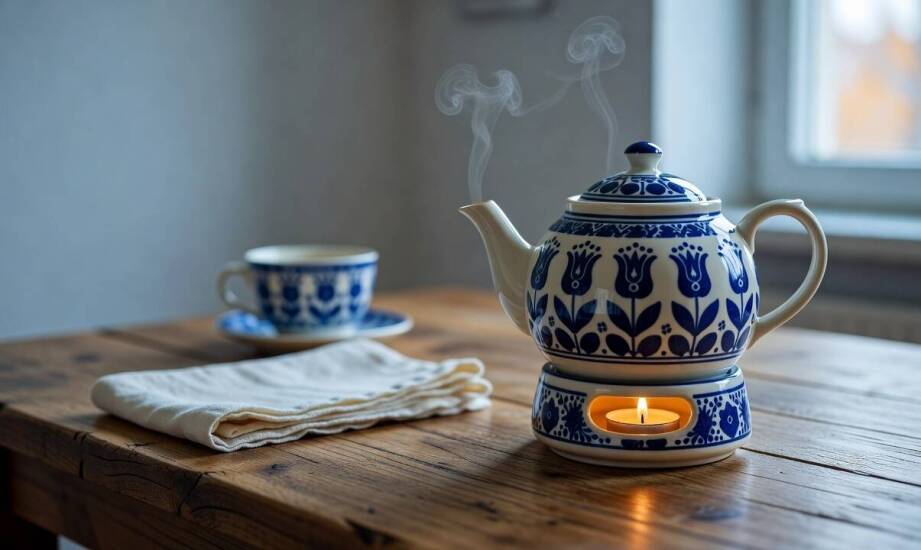
A traditional warmer uses a tealight candle placed inside a hollow ceramic base. Besides its practical role, a hand-decorated stoneware warmer can also become part of a coordinated Bolesławiec tea set.
The right choice therefore depends on two things: how well the warmer works with the teapot and how naturally its pattern fits the rest of the tableware.
How Does a Ceramic Warmer Work?
A traditional ceramic warmer uses a small tealight candle as a gentle source of heat.
The warmer has a hollow interior with openings around the sides. These holes allow air to reach the flame while also creating the characteristic glow of candlelight through the ceramic structure.
The heat produced by the candle rises towards the bottom of the teapot and helps slow down the cooling process.
The purpose of the warmer is to maintain heat rather than to boil or rapidly reheat the drink.
This makes it particularly useful when a pot of tea is served gradually over a longer period.
A standard tealight can burn for several hours, making the warmer suitable for slow breakfasts, long conversations or evening gatherings when people return for another cup at different times.
Why Is Ceramic Suitable for a Teapot Warmer?
Stoneware creates a solid structure between the small flame and the teapot.
The relatively thick ceramic walls gradually absorb and distribute heat around the warmer. This creates a gentler heating environment than placing a vessel directly over a high-temperature cooking source.
Bolesławiec warmers are produced using the same general stoneware process as other pieces from the collection.
After shaping and drying, they undergo an initial firing at approximately 900°C. They are then decorated by hand, covered with a transparent glaze and fired again at around 1250°C.
The result is a durable glazed ceramic accessory designed for repeated use at the table.
How Do You Match a Warmer to a Teapot?
The first consideration should be stability.
The bottom of the teapot needs to sit securely on the upper part of the warmer. A support that is too small may not provide sufficient stability for a larger pot.
It is therefore worth considering:
the diameter of the teapot base;
the diameter of the warmer;
the shape of both pieces;
the stability of the teapot when placed on top;
the position of the candle beneath the vessel.
The warmer should support the teapot comfortably without requiring awkward positioning.
The ventilation openings also need to remain unobstructed so that enough air can reach the tealight.
Does a Warmer Need to Match the Teapot Exactly?
No.There are two main ways to create a coordinated tea set.
Use the same pattern
Choosing a warmer and teapot with the same pattern code creates the most consistent appearance.
For example, 70MI is used across several forms in the Bunzlau Manufaktura collection.
A tea setting can therefore include matching or closely related:
teapots;
warmers;
cups and saucers;
mugs;
sugar bowls;
creamers.
This creates a clear visual connection between pieces even though their shapes and functions are different.
Mix related patterns
A warmer does not have to carry exactly the same decoration as the teapot.
Bolesławiec pottery works particularly well in mixed collections because many designs share similar colours and decorative elements.
A predominantly cobalt warmer, for example, can work with another blue-and-white pattern even if the individual motifs are different.
The choice depends on whether you prefer a formal matching set or a more relaxed mix-and-match table.
How Do Pattern Codes Help?
Pattern codes make it easier to identify matching pieces.
The warmer collection includes codes such as 61A, 70MI and AS81. These codes can be used when searching for other products carrying the same decoration.
This is especially useful when a collection is built gradually.
Instead of buying a complete tea service at once, you can start with a teapot and cups, then add a warmer or serving pieces later.
A pattern code gives you a clear reference when looking for another item in the same decorative family.
Because the pottery is decorated by hand, pieces with the same code may still show small variations in the position or intensity of individual motifs. These differences are a natural part of handcrafted production.
When Is a Ceramic Warmer Most Useful?
A warmer is most practical when tea is served over an extended period.
It can be useful during:
family breakfasts;
afternoon tea;
meetings with guests;
long dinners;
relaxed evenings at the table.
If a pot of tea is usually finished within a few minutes, a warmer may not be necessary.
Its benefit becomes more noticeable when the teapot remains on the table and several cups are poured over time.
The warmer does not replace a kettle or reheating appliance. Its role is simply to help freshly brewed tea remain warm for longer.
How Should You Use a Ceramic Warmer Safely?
Because a tealight produces an open flame, basic candle safety rules apply.
Place the warmer on a stable, level and heat-resistant surface.
Keep it away from:
paper napkins;
loose tablecloth edges;
dried flowers;
other flammable decorations.
Place the tealight securely inside the warmer before lighting it.
Never leave the candle unattended.
After use, extinguish the flame and allow both the warmer and teapot to cool naturally before handling or cleaning them.
Sudden temperature changes should be avoided with heated ceramic pieces.
How Do You Clean a Ceramic Warmer?
Allow the warmer to cool completely before cleaning it.
For everyday care, the manufacturer recommends wiping the glazed surface with a damp cloth.
Wax drips should be removed gently rather than scraped away with sharp metal tools that could damage the glaze.
If wax remains on the surface, it can be softened with gentle warmth and then wiped away with a soft cloth.
It is also worth checking the side openings occasionally to ensure that accumulated wax or dirt does not restrict airflow around the candle.
How Does a Warmer Fit into a Bolesławiec Tea Set?
A warmer is a relatively small accessory, but it can visually connect several parts of a tea setting.
Manufaktura in Bolesławiec offers teapots, cups, mugs, sugar bowls, creamers and ceramic warmers in related decorative styles.
This allows a collection to be assembled according to individual needs.
Someone who regularly serves tea for several people might combine:
a large teapot;
a ceramic warmer;
several cups or mugs;
a sugar bowl;
a creamer;
small dessert plates.
The result can be fully matched or deliberately mixed using several related Bolesławiec patterns.
Why Choose a Ceramic Warmer?
A ceramic warmer combines a simple practical function with the decorative qualities of hand-finished stoneware.
It can help tea stay warm for longer, reduce the need to interrupt a gathering to prepare another pot and create a soft candlelit effect on the table.
At the same time, pattern codes make it possible to coordinate the warmer with other pieces in a growing Bolesławiec collection.
For people who enjoy serving tea slowly, a ceramic warmer is therefore both a functional accessory and a natural extension of the tableware itself.
You might be interested

Why Invest in a Partnership with a Renowned Vegetable Supplier?
LPG Tanks – Why Invest in the Right Solutions?

The Impact of DAC-7 Regulations on Business Operations in Central and Eastern Europe